Table of Contents
Thai Peanut Sweet Potato Buddha Bowl
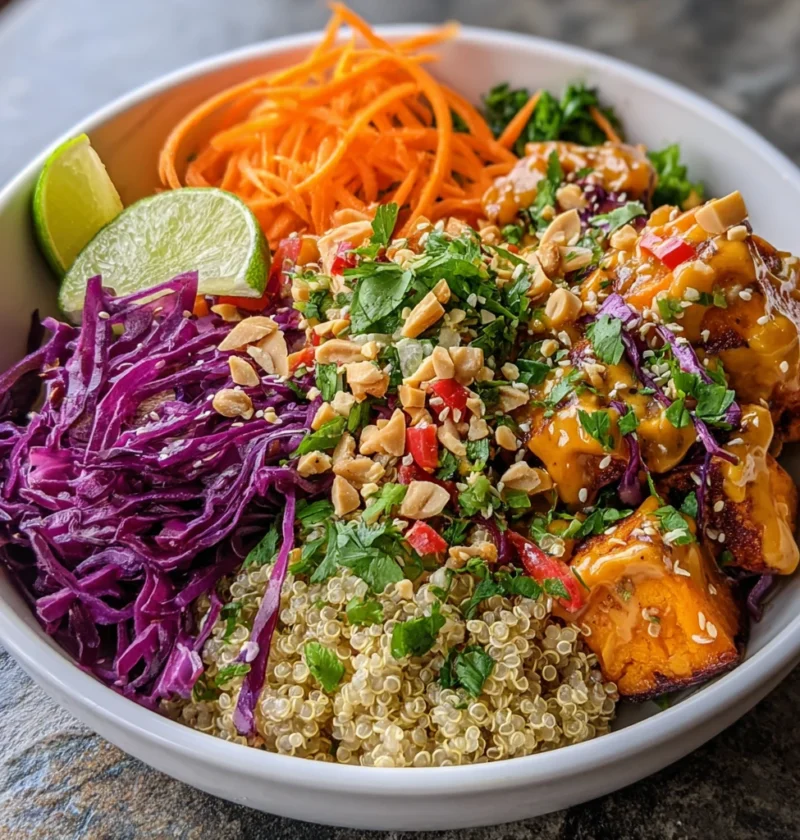
Some lunches just feel good the minute you look at them, and this Thai Peanut Sweet Potato Buddha Bowl is one of those recipes. It is colorful, hearty, and packed with everything you want in an easy healthy lunch recipe: caramelized sweet potatoes, fluffy grains, crisp vegetables, creamy peanut sauce, and enough texture to make every bite feel fresh and satisfying. Recipe sources for this style of bowl consistently pair roasted sweet potatoes with quinoa or rice, crunchy vegetables, chickpeas or chicken, and a Thai-inspired peanut sauce.
What makes this bowl so lovable is the balance. The sweet potatoes bring warmth and natural sweetness, the peanut sauce adds creamy savory richness, and the fresh vegetables keep the whole thing bright and crunchy instead of heavy. Across published versions, the sauce usually combines peanut butter with soy sauce or tamari, lime or vinegar, garlic, ginger, and sometimes coconut milk or curry paste for extra depth.
It also happens to be the kind of lunch that leaves you feeling energized instead of sluggish. Many versions are vegetarian or vegan, and some explicitly highlight that these bowls are gluten-free and nutrient-dense, with fiber from sweet potatoes, grains, chickpeas, and vegetables plus healthy fats from peanuts or peanut butter. One chicken-based variation notes 29 grams of protein and 11 grams of fiber per serving, showing how substantial this style of bowl can be.
For this version, I’m treating Thai Peanut Sweet Potato Buddha Bowl as a Thai-inspired, plant-forward lunch bowl with roasted sweet potatoes, quinoa, crunchy vegetables, chickpeas, and a creamy peanut-lime sauce. It is cozy, vibrant, meal-prep friendly, and perfect when you want a healthy lunch that still tastes bold and comforting. Let’s get started.
Why You’ll Love This Recipe
This is the kind of easy lunch bowl that quickly earns repeat status.
- It is packed with flavor from roasted sweet potatoes and creamy Thai peanut sauce, which are the defining elements across recipe sources.
- It is healthy and satisfying, thanks to the common combination of sweet potatoes, grains, vegetables, and chickpeas or another protein.
- If you love easy healthy lunch recipes, colorful grain bowls, or meal-prep lunches, this one checks every box. One source specifically notes that the meal can be ready in under 30 minutes, and another highlights it as great for meal prep.
- It is naturally flexible. Published versions use quinoa, rice, mixed greens, broccoli, cabbage, carrots, chicken, and chickpeas depending on the style.
- It works for several dietary needs because multiple sources describe similar bowls as vegan, gluten-free with the right sauce, or dairy-free.
- It gives you that perfect mix of creamy, crunchy, savory, and sweet in one bowl, which is exactly why buddha bowls feel so satisfying.
Ingredients
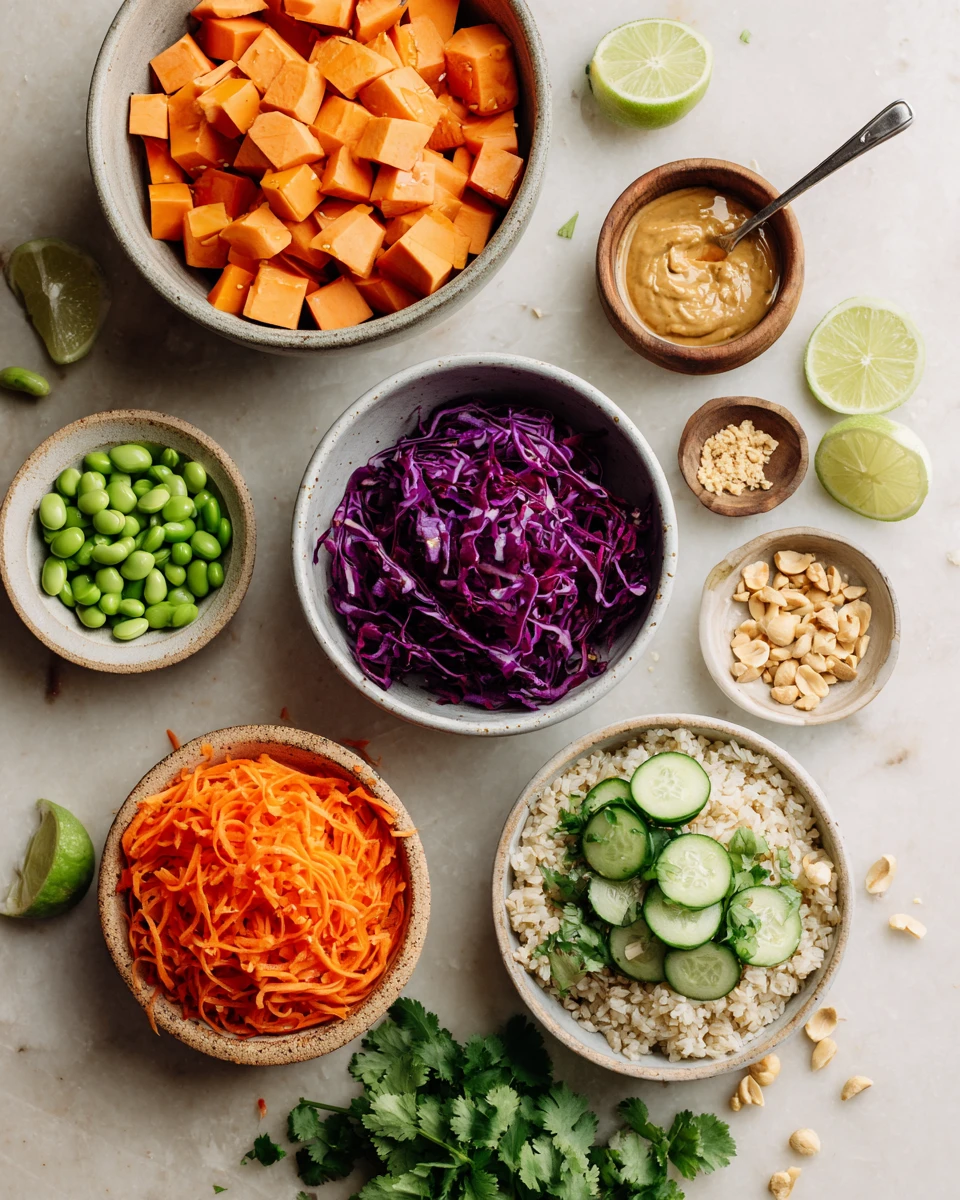
The beauty of a Thai Peanut Sweet Potato Buddha Bowl is how naturally the ingredients fall into layers: roasted vegetables, a grain base, crisp toppings, and a flavorful sauce. Across published recipes, the most common components are sweet potatoes, quinoa or rice, chickpeas, cabbage or greens, carrots, cilantro, peanuts, and a peanut sauce built from peanut butter, soy sauce, lime, ginger, and garlic.
If you want the classic healthy lunch version, keep the combination of sweet potatoes, quinoa, cabbage, chickpeas, and peanut sauce. That mix appears again and again in published recipes and gives the bowl the exact hearty but fresh personality people expect from a buddha bowl.
Step-by-Step Instructions
1. Roast the sweet potatoes
Preheat your oven to 400°F to 425°F, then toss the cubed sweet potatoes with olive oil, salt, and pepper. Recipe sources use this same roasting method, with ovens generally ranging from 400°F to 425°F and cook times from about 15 to 30 minutes depending on the cube size.
Spread the sweet potatoes on a baking sheet in a single layer and roast until tender and lightly caramelized. A good tip is to avoid overcrowding the pan, because packed sweet potatoes steam instead of roast and you lose those delicious golden edges.
2. Cook the grain base
While the sweet potatoes roast, cook the quinoa or rice according to package directions. Quinoa is one of the most common bases in these bowls, though rice and even rice noodles show up in similar versions too.
Fluff the cooked grain before serving so it stays light and not clumpy. That little step keeps the whole bowl feeling fresher and more balanced.
3. Prepare the chickpeas and vegetables
Drain and rinse the chickpeas, then either leave them as-is or roast them alongside the sweet potatoes for extra texture. Several sweet potato peanut bowl recipes include chickpeas, and some specifically roast them for added crunch.
Shred the cabbage and carrots, slice the cucumber, and wash the greens. The fresh vegetables are what give the bowl its crisp, refreshing contrast to the warm roasted components.
4. Make the Thai peanut sauce
In a bowl or blender, whisk together the peanut butter, soy sauce or tamari, lime juice, garlic, ginger, sweetener, and enough water or coconut milk to reach a pourable consistency. Across recipe sources, Thai-inspired peanut sauces for bowls consistently follow this structure, sometimes with extras like curry paste or vinegar for even more depth.
A helpful tip is to add the liquid gradually. Peanut butter can vary a lot in thickness, so thinning slowly gives you better control over the final texture.
5. Assemble the bowls
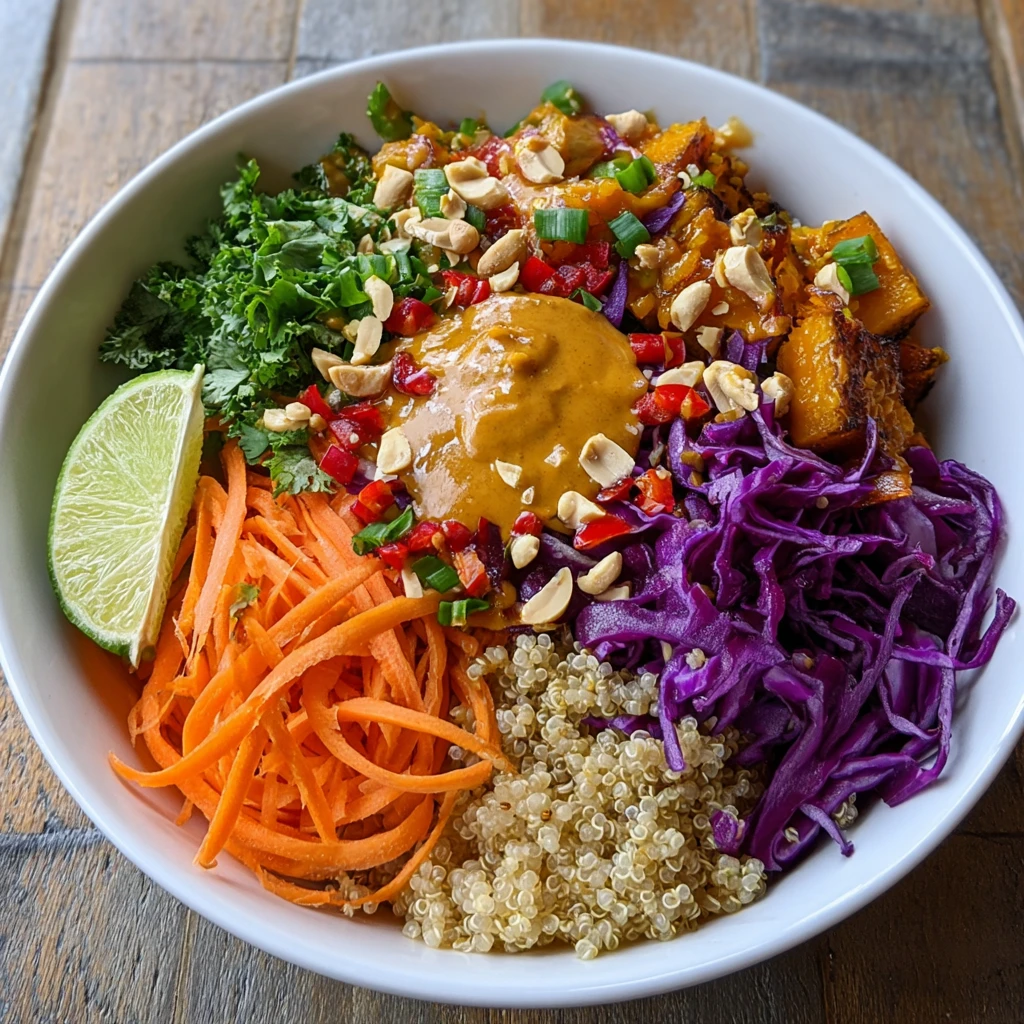
Divide the quinoa or rice between bowls, then top with the roasted sweet potatoes, chickpeas, cabbage, carrots, cucumber, greens, and cilantro. This layering style closely reflects the ingredient structure shown in buddha bowl recipes built around roasted sweet potatoes and peanut sauce.
For the prettiest presentation, arrange the toppings in sections instead of tossing them together right away. That gives the bowl the colorful, fresh look people expect from a buddha bowl.
6. Finish and serve
Drizzle the peanut sauce generously over the top, then finish with chopped peanuts and extra lime if you like. Recipe sources regularly use chopped peanuts and herbs as finishing touches because they reinforce both the flavor and the texture of the bowl.
Serve right away while the sweet potatoes are still warm and the vegetables are still crisp. That warm-cool contrast is one of the biggest reasons this bowl feels so satisfying and restaurant-worthy.
Tips for Success
These tips help your Thai Peanut Sweet Potato Buddha Bowl come out balanced, flavorful, and meal-prep friendly.
- Cut the sweet potatoes into evenly sized cubes so they roast at the same rate. Recipe timing in the sources assumes fairly uniform pieces.
- Roast the sweet potatoes at a high temperature for better caramelization. Multiple sources use 400°F to 425°F for this reason.
- Thin the peanut sauce gradually with water or coconut milk so it stays creamy but still drizzles easily.
- Use quinoa for a classic healthy lunch bowl, but rice works too if you want a softer, more comforting base. Published versions use both.
- Add something crunchy like peanuts or roasted chickpeas so the bowl does not feel too soft. Crunchy toppings appear in many of the recipes.
- Keep the fresh vegetables raw for the best contrast with the roasted sweet potatoes.
- Store the sauce separately if meal prepping, then drizzle just before eating. Several versions are clearly built for easy make-ahead lunches.
Variations & Substitutions
This recipe is very easy to adapt based on your dietary needs or whatever you have in the fridge.
Add chicken for more protein
One Thai-inspired peanut sweet potato bowl variation includes chicken along with broccoli and chickpeas, and it delivers 29 grams of protein per serving. This is a great option if you want a more filling lunch or dinner.
Make it fully vegan
Use maple syrup instead of honey and make sure your sauce ingredients are plant-based. Several published versions of Thai peanut sweet potato buddha bowls are specifically vegan.
Swap the grain
Use brown rice, white rice, farro, or even rice noodles instead of quinoa. Recipe sources specifically mention these as serving options for similar peanut sweet potato bowls.
Add more vegetables
Broccoli, bell pepper, spinach, Brussels sprouts, or cucumber all work well in this style of bowl. These vegetables appear across the published recipes and fit the flavor profile beautifully.
What to Serve With It
This bowl is filling enough for a complete lunch, but a few simple additions can round it out nicely.
- Serve it with extra lime wedges and a little sriracha if you want more brightness and heat. One source specifically recommends a drizzle of sriracha.
- Add a light soup or simple miso-style broth for a cozy lunch pairing.
- Pair it with fresh fruit like pineapple or mango for a bright, juicy contrast to the peanut sauce.
- For a more substantial dinner, serve it with spring rolls or a small cucumber salad for a cool and crunchy side.
Storage & Reheating
This recipe works very well for meal prep because the components hold up nicely when stored separately. One source specifically notes that a similar peanut chicken sweet potato bowl is great for meal prep, and the overall structure of these bowls makes them naturally easy to prep ahead.
Store the sweet potatoes, grain, chickpeas, vegetables, and peanut sauce in separate airtight containers in the refrigerator for up to 4 days. Reheat the sweet potatoes and grain gently, then assemble with the cold vegetables and drizzle with sauce just before serving so the bowl keeps its fresh texture. That method fits the layered hot-and-cold structure shown in the recipe sources.
If the peanut sauce thickens in the fridge, stir in a little warm water or lime juice before serving. Peanut-based sauces commonly need loosening after chilling because they naturally firm up as they cool.
Nutrition Facts
Nutrition varies depending on your grain, how much sauce you use, and whether you add extras like chicken or more peanuts. One chicken-based Thai peanut sweet potato bowl lists 431 calories, 24 grams of fat, 28 grams of carbs, 7 grams of fiber, and 584 milligrams of sodium per serving, while a peanut sweet potato bowl product listing shows 690 calories, 36 grams of fat, 80 grams of carbs, and 17 grams of protein per bowl.
Here is a practical estimated nutrition profile for one serving of a vegetarian Thai Peanut Sweet Potato Buddha Bowl with quinoa, chickpeas, vegetables, and moderate peanut sauce:
| Nutrient | Estimated per serving |
|---|---|
| Calories | 420 to 620 |
| Protein | 12 to 20 g |
| Carbs | 45 to 75 g |
| Fat | 16 to 28 g |
| Fiber | 8 to 15 g |
| Sugar | 8 to 21 g |
| Sodium | Varies widely depending on soy sauce and peanut sauce |
This bowl is generally vegetarian, can easily be vegan, and can be gluten-free when made with tamari instead of standard soy sauce. It is also a solid high-fiber lunch option, though it is not low-carb because sweet potatoes, grains, and chickpeas all contribute carbohydrates. Those diet notes align closely with the published recipe descriptions.
Common Mistakes to Avoid
These are the easiest ways to keep your bowl tasting fresh and balanced.
- Overcrowding the pan can make the sweet potatoes steam instead of roast, which means less caramelization and less flavor.
- Making the peanut sauce too thick can leave the bowl heavy instead of creamy and drizzle-friendly.
- Forgetting acid can make the sauce taste flat. Lime juice or vinegar appears in the peanut sauce across many versions.
- Skipping a crunchy element like peanuts or roasted chickpeas can make the bowl feel one-note. Those toppings appear often for a reason.
- Mixing everything together too early for meal prep can soften the vegetables and dull the texture. Keeping components separate works better.
FAQ
Can I make Thai Peanut Sweet Potato Buddha Bowl ahead of time?
Yes. It is very meal-prep friendly when you store the components separately and assemble before eating. Several similar bowl recipes are explicitly described as meal prep friendly.
Is this recipe vegan?
It can be. Multiple published versions are vegan, and you can keep it that way by using maple syrup instead of honey and sticking with plant-based toppings.
What grain works best in a buddha bowl?
Quinoa is one of the most common choices in these recipes, but brown rice, white rice, and even rice noodles also work well. Published sources mention all of those options.
Can I use almond butter instead of peanut butter?
The sources focus on peanut butter, but the overall sauce method would also work with another creamy nut or seed butter. Just note that the flavor would be different from the classic Thai peanut profile reflected in the published recipes.
How do I make the peanut sauce thinner?
Add warm water, lime juice, or a little coconut milk gradually until it reaches the consistency you want. Multiple recipe sources recommend this exact approach.
Can I add more protein?
Yes. Chickpeas already help, and one published variation adds chicken for an even higher-protein bowl.
Is this bowl gluten-free?
It can be, as long as you use tamari or another gluten-free soy sauce alternative. Multiple recipe sources describe similar bowls as gluten-free with the right sauce ingredients.
Conclusion
Thai Peanut Sweet Potato Buddha Bowl is everything a great lunch should be: colorful, filling, nourishing, and full of bold flavor. With roasted sweet potatoes, crisp vegetables, hearty grains, and creamy peanut sauce, it turns simple ingredients into a bowl that feels both energizing and deeply comforting. That identity is strongly reflected across the published Thai peanut sweet potato bowl and buddha bowl recipes.
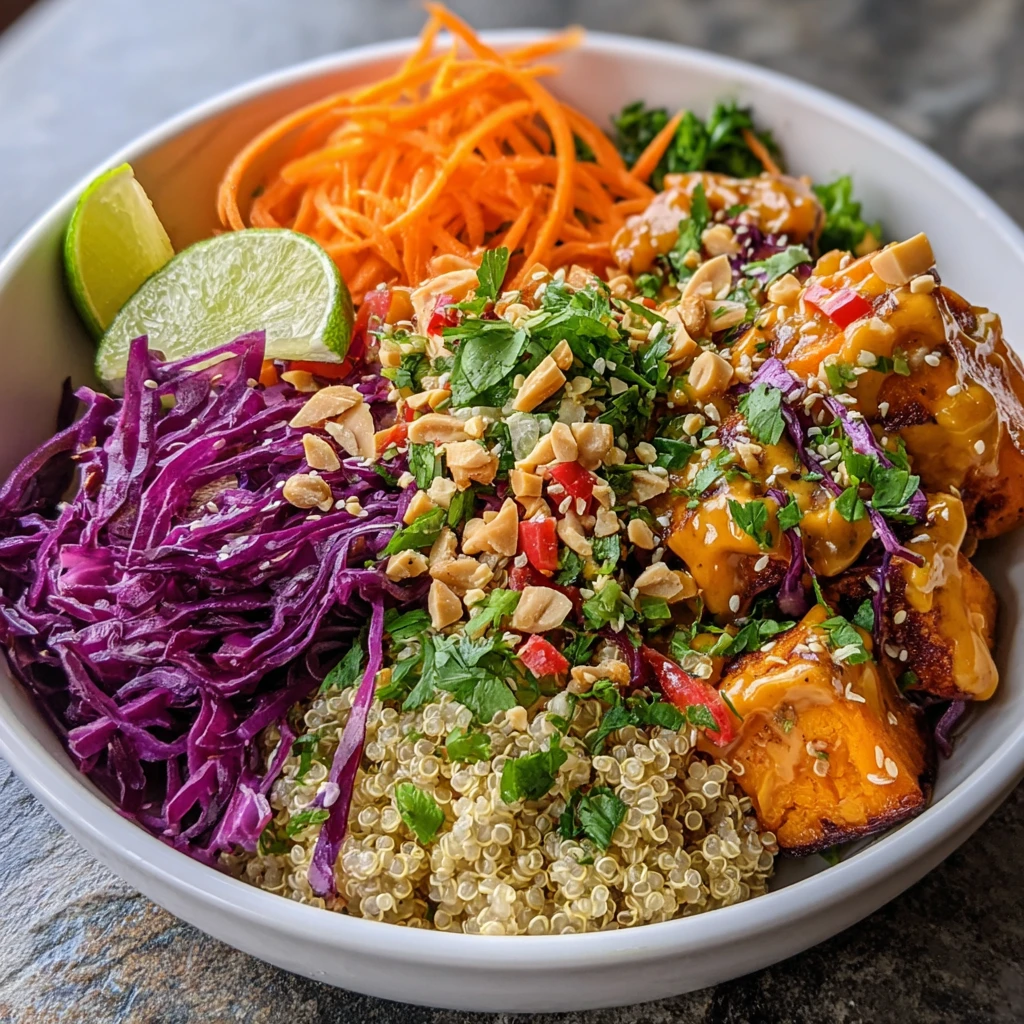
Thai Peanut Sweet Potato Buddha Bowl: Easy Healthy Lunch Recipe
A vibrant and nourishing dish featuring roasted sweet potatoes, crunchy veggies, chickpeas, and a creamy peanut sauce, creating a symphony of flavors that will tantalize your taste buds.
Ingredients
- 2 medium Sweet Potatoes
- 1 can Chickpeas, drained and rinsed
- 1 Red Bell Pepper, sliced
- 1 Cucumber, sliced
- 2 Carrots, shredded
- 1 cup Red Cabbage, shredded
- 2 Green Onions, chopped
- 1/4 cup Roasted Peanuts
- 1/4 cup Coconut Milk
- Spices (such as salt, pepper, and red pepper flakes)
Directions
- Preheat the oven to 400°F (200°C) and roast the sweet potatoes for about 25-30 minutes until tender and caramelized.
- In a blender, combine the roasted peanuts, coconut milk, and spices to make the creamy peanut sauce.
- In a bowl, layer the roasted sweet potatoes, chickpeas, red bell pepper, cucumber, carrots, and red cabbage.
- Drizzle the creamy peanut sauce over the bowl and garnish with chopped green onions and additional roasted peanuts.
- Serve fresh and enjoy this delightful and nourishing Thai Peanut Sweet Potato Buddha Bowl.